Government · FAA / LAANC
Simplifying the Skies
Designing an Intuitive Admin Panel for Air Traffic Control Systems

Context
Rapid growth of the LAANC program created a new pain point. Facility managers needed a simple way to create users, manage UAS Service Suppliers, and administer controlling facilities and facility groups. The legacy process relied on manual database steps and was slow, error prone, and hard for non-technical staff. The Admin Panel was conceived as an internal, role based web app that made onboarding and administration fast and clear.
Role
What company or client? Federal aviation program context within the LAANC team. Internal administration tool.
What kind of project? Enterprise admin console for user, vendor, and facility management with permissions.
Duration? March 2018 to March 2019.
Who did I work with? Product Owner, SMEs, Business Analysts, Information Architects, Developers.
My contribution? Lead Designer from concept to handoff. I owned discovery, interviews, storyboards, journey mapping, information architecture, interaction models, wireframes, prototyping, visual design, accessibility alignment, stakeholder presentations, and design handoff.
Main challenge
Project Goals
Make onboarding and administration simple for managers with no database knowledge, while keeping the experience familiar to Air Traffic Managers.
Measure of success Shorter time to add users and USS entries, fewer setup errors, clear role separation, adherence to brand and WCAG 2.0 AA, quick delivery on a tight timeline.
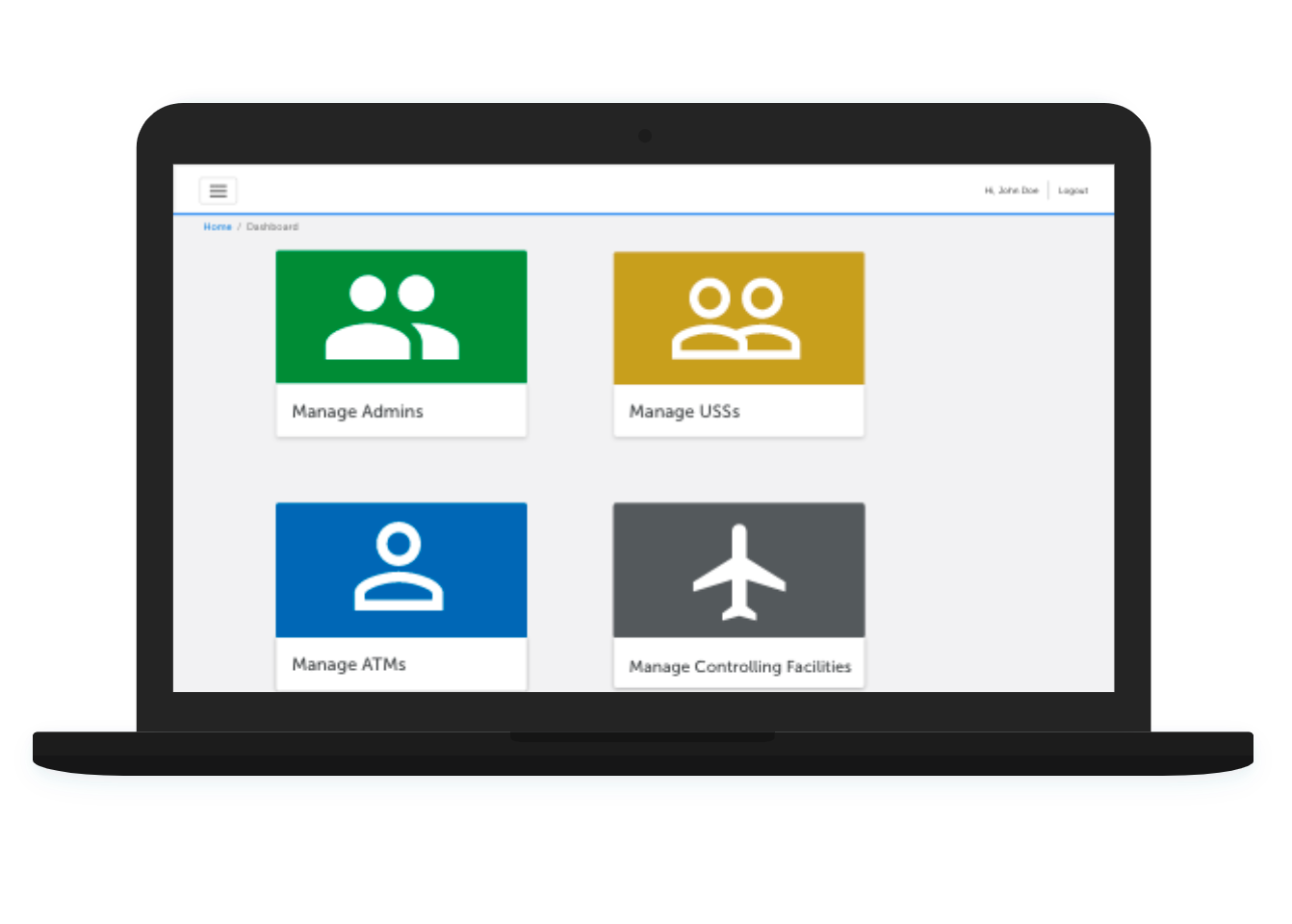
Starting idea Use a modular, card based interface with permission controlled visibility so each role only sees the actions and data they need.
How might we…
- Clearly differentiate administrator types for general admins and Air Traffic Managers
- Integrate UAS Service Supplier management
- Manage controlling facilities and facility groups
- Keep the UI consistent with existing ATM dashboards
- Create an end to end flow that makes adding personnel simple for non-technical users
Process Outline
- Business brief and goals
- Research
- Competitive and pattern review
- User needs
- Hypothesis
- Personas and roles
- Brainstorming and storyboards
- Design sprint activities
- Prototyping
- Wireframes and user flows
- Visual design and accessibility
- Handoff & Development collaboration
Business Goals & Brief
The Project Details
- Address exponential onboarding needs as LAANC scaled.
- Reduce manual database work by managers.
- Provide a permission aware admin tool that is fast to learn and easy to use.
Research
- Interviews with SMEs and the Product Owner to map motivations, pain points, and edge cases.
- Inventory of existing admin tasks and approval rules across facilities.
Competitive and pattern review
- Reviewed internal FAA patterns for familiarity.
- Evaluated admin console patterns that favor clarity, empty states, and inline help.
Identified User needs
- Simple add and invite flows for users and roles.
- Clear separation between general admin actions and ATM specific controls.
- Ability to manage facilities, facility groups, and USS relationships in one place.
Personas and roles
- Primary: Facility Manager who onboards staff and needs a safe, low friction admin tool.
- Secondary: ATM who performs operational tasks but may view limited admin data.
Designing and Prototyping
Target audience, compromises, and KPIs
Target audience Facility managers and designated admins who need to quickly onboard users and manage entities without database expertise.
How personas informed design Role needs drove the card based layout and permission visibility. Familiar visual patterns reduced training time.
Compromises
- Compressed discovery and concept exploration due to timeline.
- Deferred deeper componentization and broader end user testing to later phases.
KPIs Time to onboard, error rate during setup, completion rate of key admin tasks, and accessibility conformance.
Development collaboration
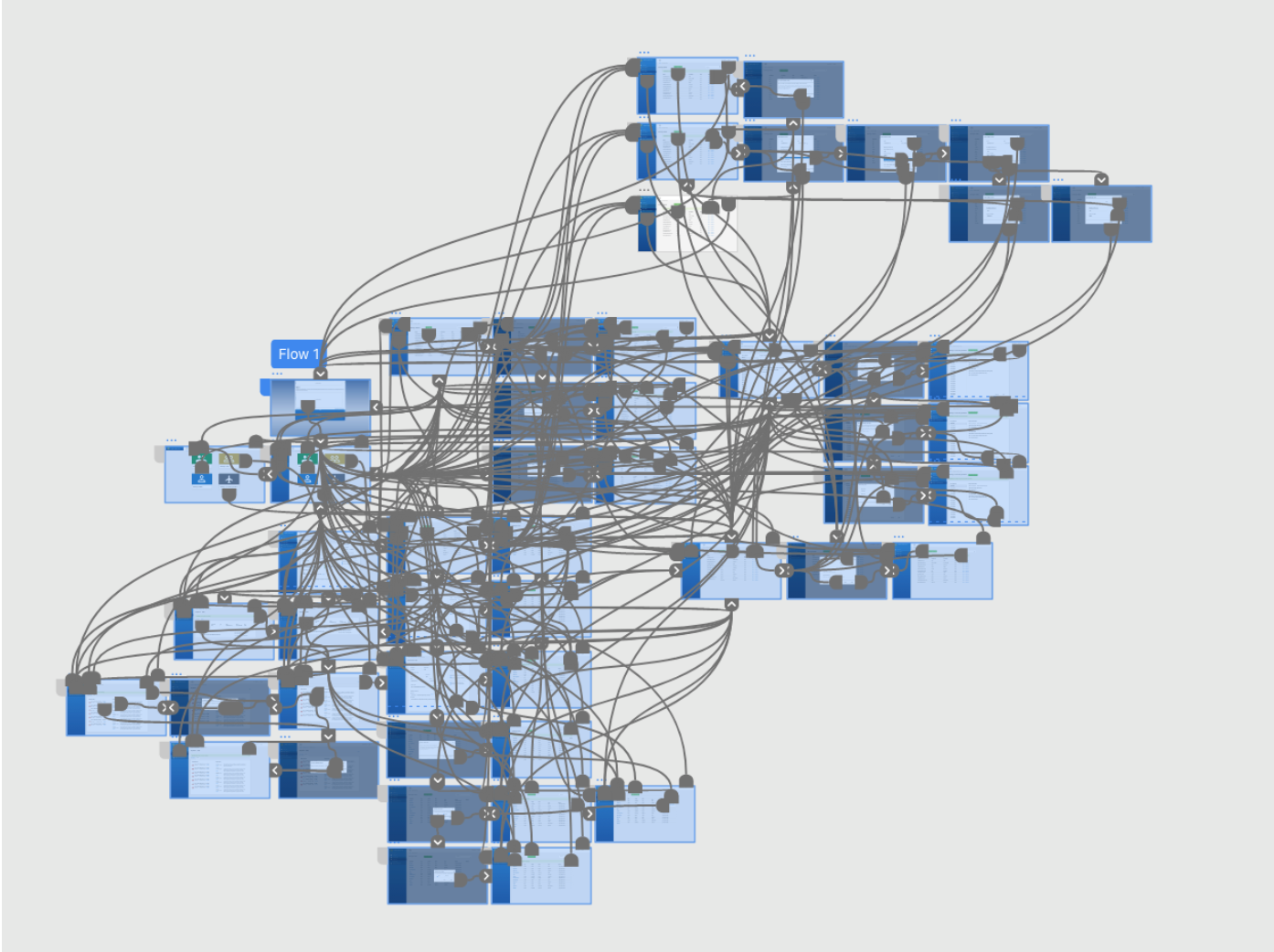
- Partnered with engineers for feasibility and rapid implementation.
- Provided specs, redlines, and role permission matrices.
- Adjusted copy and component states during build to match real data.